In our last days of Queensland and the road trip, we have decided to visit two must see destinations of Australia that everybody was talking about: Whitsunday islands and Great Barrier Reef. First we head to Airlie beach, which is a lovely small holiday town, where you can book tours and visit the islands and south part of the reef.

Lagoon of Daydream Island
There are many islands as part of Whitsundays, and you really get confused as tourist among many different tour options, which are rather pricy. We decided to be efficient and picked a day tour, where we could visit three different islands: Daydream Island was a a bit disappointment honestly, and extremely commercial. Kids enjoyed the pool and the lagoon and we learned about the fishes in the reef. Hamilton Island was huge and we didn’t have really any time to see it because of the ferry times, and bad planning of the tour company.
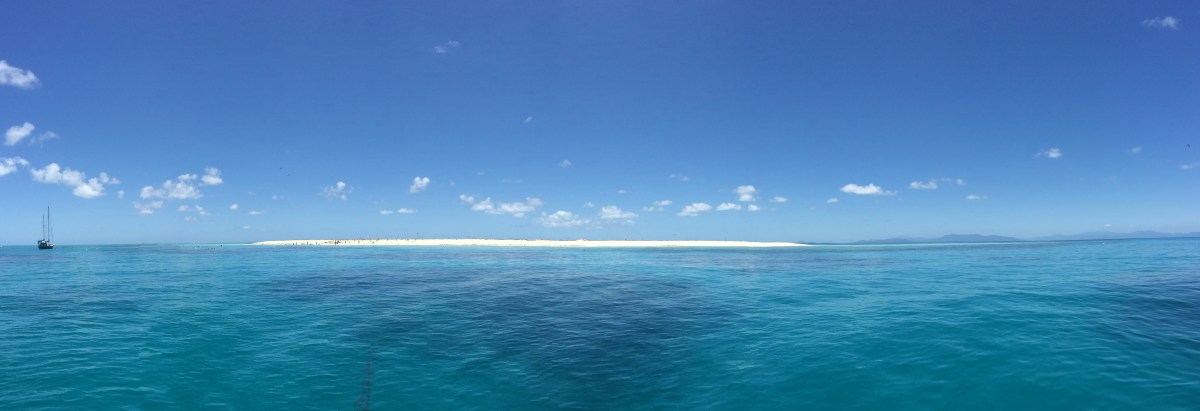
However, the last island, Whitehaven Beach, was really a heaven. It is a 7 km stretch along Whitsunday Island, only accessible by boat from the mainland tourist ports. It is ranked among the best beaches in the world. The sand there consists of 98% pure silica which gives it a bright white color. Local rocks do not contain silica so it has been suggested that the sands were brought to the beach via prevailing sea currents over millions of years. Because of the brightness they recommended us to wear extremely high sun cream, or suits just to protect from the reflects of the sun. The water was extremely clear. Whitehaven Beach made this tour totally worth going.

Whitehaven Beach
Then, on the road again… After driving 600km and passing through rain forests, the climate changed and we arrived to our last destination, Cairns. This is a charming city and best place to go to Great Barrier Reef.
I couldn’t really expect anything when we booked the snorkeling trip to Great Barrier Reef. It could be fun day at the sea, or a total mess with kids. Little I knew. It was amazing, educational, fun and beautiful day with some really nice people and crew around.
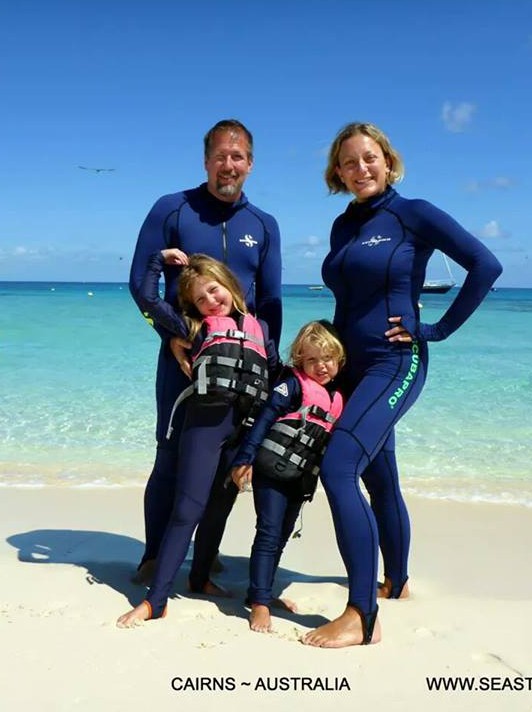
Ready to snorkel in Great Barrier Reef
Zeynep booked the day trip from Seastar Cruises. The package included the full day ride, all gears including full body suite against the jellyfishes for safe snorkeling an introduction for the snorkel tours with valuable information about the local sea life and lunch, cakes and coffees. Whole treat!
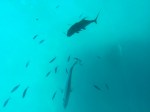
We were snorkeling in two different locations and saw surprisingly many different fishes, sea cucumbers, different types of sea weeds and corals, turtle tracks and A SHARK. There were two 30 minutes guided tours with hands on intro of the natures wonders and about 3 hours of own time to swim around the areas. I would call this plenty, considering that some of the time were used to set up the gears and getting used to the masks and fins.
Here’s a tip for you. If you ever consider to participate to one of the many tours, pick one, which takes maximum a group of 40 people out in a boat. Bigger groups has more needs and the crew of the boat can handle only certain amount of issues per day. In our boat, there was 6 crew members and 36 customers. They had plenty of work, but they did take the time to help all the ones who needed a hand.
Since our girls wanted to snorkel too the crew helped us to pick the right gears and stayed with us while trying them at the first time. Lara picked up it very fast. She was able to breathe trough the tube and use the fins very well. Ada was a bit more scared and lazy and chose to have a free ride on a life buoy. Nevertheless, the whole family was able to get a closer look of the reef and was able to enjoy it the whole day. Beautiful!!
Here is a small gallery and link to Seastars FB-page where you find more pictures of that day. Here is couple of pictures from us (you can see as gallery):
-
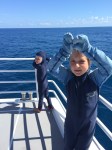
- On the way to the reef




-

- Ready for the dive
-
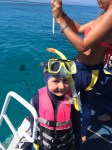
- Lara after the day
-

- maybe next time we try these
Here are also some interesting facts about Great Barrier Reef, one of the many natural wonders of Australia, from greatbarrierreef.org.
- The Great Barrier Reef is a popular tourist destination with over two million visitors each year.
- Tourism to the reef generates approximately AU$5-6 billion per year.
- The Great Barrier Reef is the world’s largest reef system.
- The Great Barrier Reef is composed of over 2,900 individual reef.
- The Great Barrier Reef has over 900 islands stretching for over 2,600 kilometres.
- The Great Barrier Reef can be seen from outer space.
- The Great Barrier Reef is approximately the same area as Italy, Germany, Malaysia or Japan.
- Thirty species of whales, dolphins, and porpoises have been recorded in the Great Barrier Reef.
- Six species of sea turtles come to the reef to breed.
- 215 species of birds (including 22 species of seabirds and 32 species of shorebirds) visit the reef or nest or roost on the islands.
- Seventeen species of sea snake live on the Great Barrier Reef.
- More than 1,500 fish species live on the reef.
- Around 10 percent of the world’s total fish species can be found just within the Great Barrier Reef.
- There are at least 330 species of ascidians on the reef system.
- The Great Barrier Reef is an extremely ancient, enormous host of living things, composed of living coral growing on dead coral dating back perhaps as much as twenty million years.
- Climate change is perhaps the biggest threat to the Great Barrier Reef.
- Warmer ocean temperatures put stress on coral and lead to coral bleaching.
- The Great Barrier Reef has experienced two mass coral bleaching events in 1998 and 2002. Bleaching was more severe in 2002, when aerial surveys showed that over 50% of reefs experienced some coral bleaching.
- Sediment, nutrient and agriculture pesticide pollution from river catchment run-off is also affecting the health of the Great Barrier Reef.
Great Day!
 4 bags of clothes